
Exploring the intricacies of a Roof Estimate Preparation Checklist, this introduction aims to captivate readers with a detailed yet engaging overview of the topic. From essential items to software tools, this checklist is the cornerstone of a successful roof estimation process.
As we delve deeper, we will uncover the significance of each step and how they contribute to the accuracy of estimates and the overall success of a roofing project.
Roof Estimate Preparation Checklist
When preparing a roof estimate, it is crucial to have a detailed checklist to ensure accuracy and efficiency in the estimation process. A well-prepared checklist can help streamline the estimation process and ensure that all necessary items are accounted for.
Here are some essential items needed for preparing a roof estimate:
Essential Items for Roof Estimate Preparation:
- Roof measurements, including length, width, and slope
- List of materials needed for the project, such as shingles, underlayment, and flashing
- Cost estimates for materials and labor
- Identification of any additional work required, such as repairs or replacements
- Insurance and permit information
Importance of Having a Detailed Checklist:
A detailed checklist ensures that no crucial steps or items are overlooked during the estimation process. It helps to provide a comprehensive overview of the project requirements and allows for accurate cost estimation.
How a Checklist Can Help Streamline the Estimation Process:
By following a checklist, contractors can systematically go through each item, ensuring that nothing is missed. This helps in creating a structured approach to estimating the project and saves time by avoiding the need to backtrack or make corrections later on.
Examples of Software or Tools for Creating a Roof Estimate Checklist:
- RoofSnap: A software that allows contractors to measure and estimate roofs quickly and accurately.
- Xactimate: A tool that helps in creating detailed cost estimates for roofing projects.
- AccuLynx: A roofing software that assists in project management, including estimation and job tracking.
Roof Inspection
During a roof inspection, it is crucial to carefully assess various aspects of the roof to ensure accurate estimates and identify any potential issues. By documenting findings and following a systematic approach, you can effectively evaluate the condition of the roof and provide clients with reliable estimates.
Steps for Conducting a Thorough Roof Inspection
- Start by examining the exterior of the roof, looking for signs of damage, wear, or aging.
- Check the condition of the shingles, tiles, or other roofing materials for any cracks, missing pieces, or signs of deterioration.
- Inspect the gutters, downspouts, and flashing to ensure proper drainage and prevent water damage.
- Evaluate the condition of the roof vents, chimneys, and skylights for any leaks or structural issues.
Aspects to Assess During an Inspection
- Roofing material condition
- Flashing and sealant integrity
- Gutter and downspout functionality
- Ventilation systems
Documenting Findings for Accurate Estimates
When documenting findings from the roof inspection, be sure to include detailed notes, photographs, and measurements. This information will help you provide accurate estimates and communicate effectively with clients about the condition of their roof.
Tips for Identifying Common Roofing Issues
- Look for signs of water damage, such as water stains on ceilings or walls.
- Check for moss or algae growth, which can indicate poor drainage or ventilation issues.
- Inspect for loose or damaged shingles, which can lead to leaks and further damage.
- Examine the attic for signs of leaks, mold, or insulation problems.
Measurements and Calculations
Accurate measurements are crucial when preparing a roof estimate as they directly impact the amount of materials needed and the overall cost of the project. Inaccurate measurements can lead to underestimating or overestimating the required materials, resulting in delays and additional expenses.
Methods for Measuring Roof Dimensions
When measuring roof dimensions, there are a few common methods used by roofing professionals:
- Using a tape measure: This is the most traditional method where measurements are taken manually using a tape measure.
- Aerial measurement tools: Some contractors use drones or satellite imagery to measure the roof dimensions accurately.
- Roofing software: There are specialized software programs that can help in measuring roof dimensions quickly and accurately.
Calculating Material Quantities
After obtaining accurate measurements, the next step is to calculate the quantities of materials needed for the project. This involves determining the square footage of the roof area and then translating that into the required amount of shingles, underlayment, flashing, and other materials.
Formula for calculating square footage: Length x Width = Square Footage
Formulas and Tools for Precise Calculations
To ensure precise calculations, there are specific formulas and tools that can be utilized:
- Roofing material calculators: Online tools or software that can help in calculating the exact quantities of materials needed based on the roof measurements.
- Pitch factor calculation: Taking into account the roof pitch when calculating material quantities to avoid underestimating the required materials.
- Waste factor calculation: Adding a waste factor to the material quantities to accommodate for any errors or unforeseen circumstances during the installation process.
Material Selection and Cost Analysis
When it comes to selecting materials for a roofing project, it is crucial to consider both the quality and cost-effectiveness of the options available. Different roofing materials offer various benefits and come with different price tags, which can significantly impact the overall cost of the project.
Types of Roofing Materials
- Asphalt shingles: One of the most common and affordable roofing materials.
- Metal roofing: Known for its durability and longevity, but comes with a higher price tag.
- Wood shingles: Provide a natural look but may require more maintenance over time.
- Clay tiles: Offer a unique aesthetic appeal and are long-lasting, but can be expensive.
Cost and Benefit Comparison
- Asphalt shingles are cost-effective but may not last as long as metal roofing.
- Metal roofing, while more expensive upfront, can result in long-term savings due to its durability.
- Wood shingles are aesthetically pleasing but may require more maintenance and have a shorter lifespan.
- Clay tiles are durable and offer a unique look, but they come with a higher price tag.
Factors to Consider for Material Selection
- Climate: Choose materials that can withstand the weather conditions in your area.
- Budget: Consider the upfront cost as well as long-term maintenance expenses.
- Architectural Style: Select materials that complement the style of your home.
- Durability: Look for materials that will last and require minimal maintenance.
Tips for Analyzing Material Costs
- Obtain quotes from multiple suppliers to compare prices.
- Consider the cost of installation and any additional materials needed.
- Factor in the lifespan of the materials to determine long-term value.
- Consult with roofing professionals for advice on the best materials for your specific project.
Final Thoughts
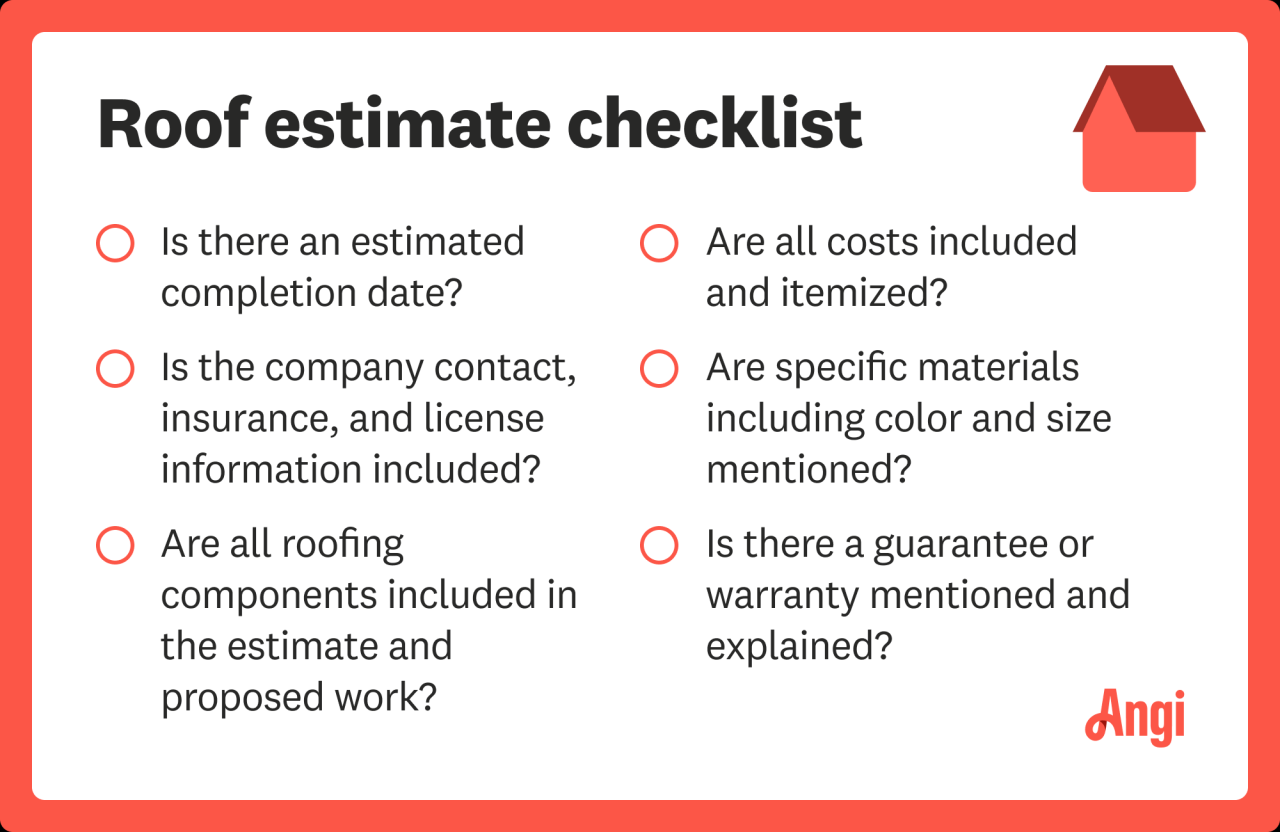
In conclusion, a meticulous Roof Estimate Preparation Checklist is the key to efficient and precise estimates, ensuring smooth project execution and client satisfaction. By following these guidelines and utilizing the right tools, you can elevate your roofing business to new heights.
Top FAQs
What are the essential items needed for preparing a roof estimate?
Items such as measuring tape, ladder, pitch gauge, and calculator are crucial for accurate estimates.
How can a checklist streamline the estimation process?
A checklist ensures that no crucial step is missed, organizes tasks efficiently, and reduces the likelihood of errors.
What software or tools can assist in creating a roof estimate checklist?
Tools like RoofSnap, AccuLynx, and Roofgraf are popular choices for creating detailed roof estimate checklists.